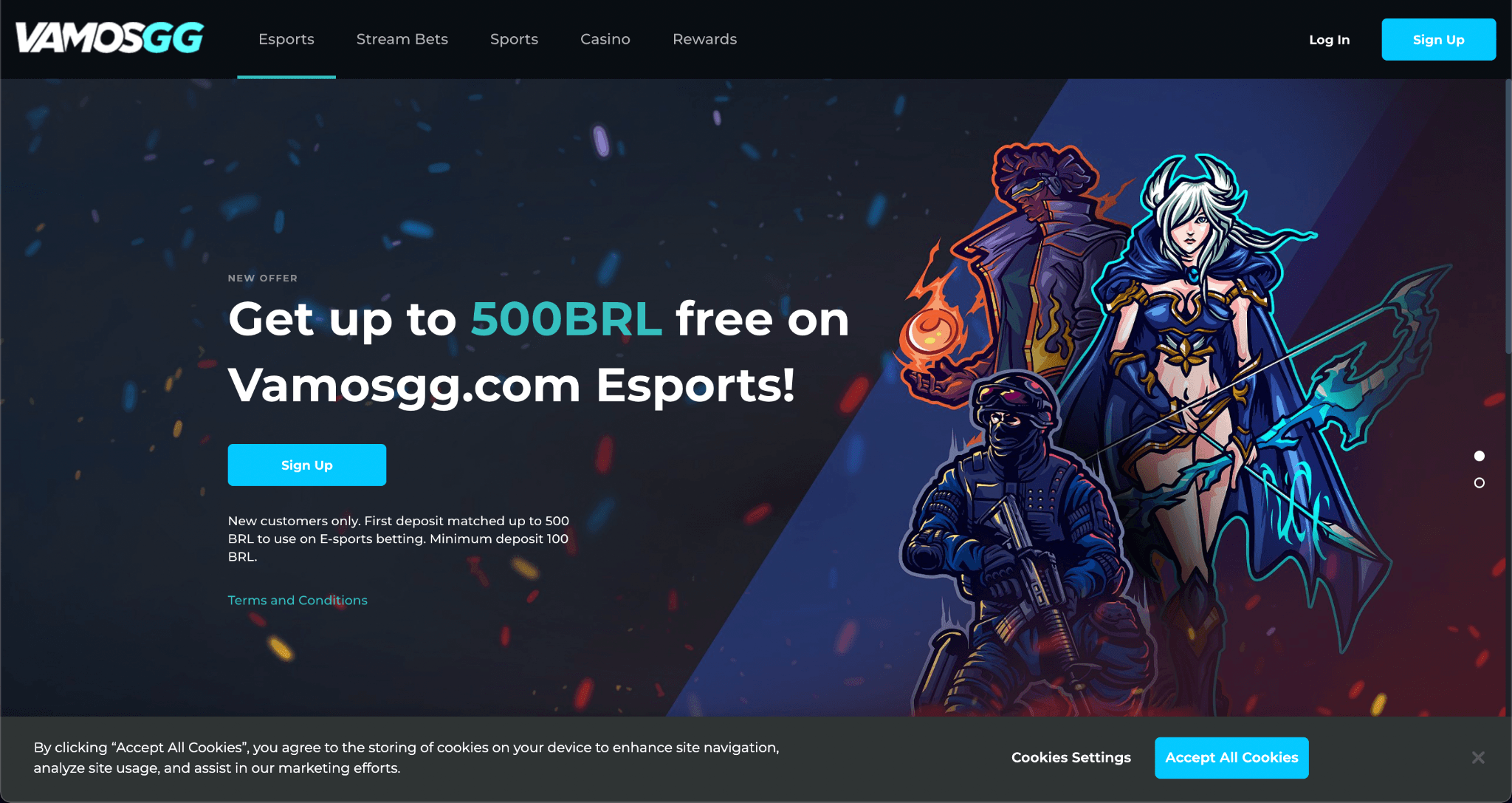
VamosGG is an esports-focused betting and fantasy platform for online gaming audiences. It offers interactive wagering and fantasy experiences around popular esports titles, for users who expect the speed and polish of the games they play. Live matches mean the data changes constantly, and the interface has to keep up without getting in the way.
I worked on frontend and backend-connected functionality with React.js, Next.js, Node.js, TypeScript and Redux, contributing to the betting and fantasy features of the platform.
Live match data that stays current
Situation
During a live esports match, events and odds change quickly. If the screen lags behind the match, users lose trust in the product immediately.
How I handled it
I built components for real-time event and odds display that update only the parts of the screen that changed, with the data model typed in TypeScript so every component treated an event or market the same way.
Outcome
A live view that keeps pace with the match while the rest of the page stays responsive.
- Real-time UI
- TypeScript
- Performance
Bet state that survives navigation
Situation
Users move between matches, markets and fantasy features while building selections. Losing a selection when changing page is frustrating and costs the product a bet.
How I handled it
I kept user sessions and bet state in Redux, separate from page components, so selections persist while users move around the product.
Outcome
Selections and sessions that stay consistent across the whole product.
- State management
- Redux
- User empathy
A product that changes every week
Situation
An esports product adds titles, markets and promotions often. Without reusable building blocks, every new feature means rebuilding the same pieces.
How I handled it
I focused on modern, reusable UI components and maintainable implementation, and built SSR-optimized pages with Next.js for fast first loads.
Outcome
New features could be assembled from existing components instead of starting from scratch.
- Component design
- Next.js
- Maintainability
- 1
Discoveruser opens a live esports match from the event list
- 2
Followreal-time events and odds update on screen
- 3
Selectthe user adds selections, kept in Redux across pages
- 4
Confirmthe bet is placed through the Node.js API
- 01
- 02
- 03
- 04
A fast-moving product needs a team that can change direction without friction. I kept components reusable and documented in code, gave and took code review feedback openly, and talked to backend colleagues early when an API shape did not fit what the interface needed.
| Technology | How I used it |
|---|---|
| React.js | Betting, fantasy and live event interfaces |
| Next.js | Server-side rendered pages and routing |
| Node.js | Backend APIs for events, odds and user data |
| TypeScript | Typed events, markets, odds and bet data |
| Redux | User sessions and bet state across the product |
| SWR | Fetching and revalidating match, odds and stream data without blocking the page |
| SASS/SCSS | Component styles and theming for the esports betting and streaming screens |
| Jest | Unit tests for betting logic, formatting and state reducers |
| React Testing Library | Component tests for bet slips, match cards and stream controls |
| Cypress | End-to-end tests for the main betting and viewing flows |
| CircleCI | CI pipeline running tests and builds on every pull request |
| Sentry | Error monitoring for the real-time odds and streaming screens |
| Google Analytics | Tracking how fans move between streams, matches and bets |
Key areas of work:
- Betting and fantasy product UI with React.js and Next.js
- Real-time event and odds display components
- Redux state management for user sessions and bet state
- Node.js backend-connected API integration
- SSR-optimized pages with Next.js for performance and SEO