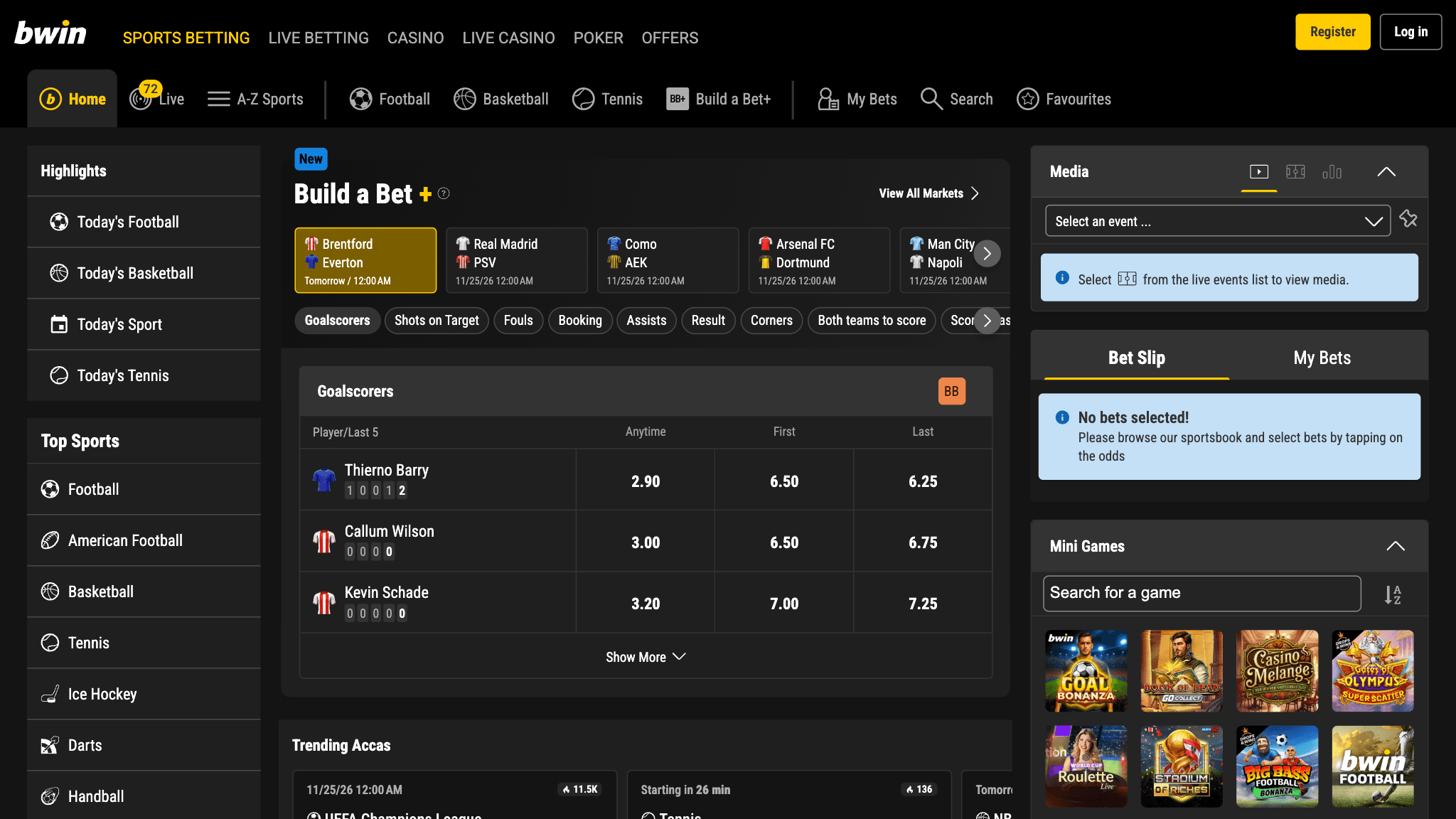
Bwin is one of Europe's largest online sports betting platforms, offering in-play sports markets, sports news and interactive wagering across football, tennis, basketball and dozens of other sports. It serves millions of active users with real-time odds and live event data, so every interface has to stay fast and correct while the numbers on it keep moving.
I worked on frontend and backend-connected product functionality with React.js, TypeScript, Node.js and Redux, contributing to the user-facing betting experience in a high-traffic, high-concurrency product. My focus was the in-play surface: how odds, events and selections reach the screen and stay accurate.
Odds that change while the user is deciding
Situation
In-play prices move every few seconds during a match. A user can be halfway through choosing a selection when the odds change, and if the screen lags or silently swaps a number, trust in the product is gone.
How I handled it
I kept live markets in Redux as typed TypeScript models and structured components so an odds update re-renders the selection it belongs to rather than the whole event list. Changes to a price the user is looking at are made visible instead of happening quietly.
Outcome
Real-time odds interfaces that stay responsive during busy matches and make price changes obvious to the user.
- Real-time UI
- Redux
- Attention to detail
Finding the right market in a huge, moving catalogue
Situation
The catalogue covers many sports, leagues and events at once, and events start, finish and change state all the time. Users want to reach one specific market quickly, not scroll through everything.
How I handled it
I built event listing and filtering experiences around how bettors actually browse: by sport, competition and live status, with filters that keep working as the underlying event data updates.
Outcome
Faster paths from the home screen to a specific market, on a catalogue that never stands still.
- UX thinking
- Data-heavy UI
Shipping safely in a product that cannot go down
Situation
A betting platform at this scale is used around the clock, and releases happen while live events are running. A careless release is felt by a very large number of people immediately.
How I handled it
I integrated my work into the Jenkins CI/CD pipelines, kept changes small and reviewable, and coordinated with backend and cross-functional teams on the Node.js endpoints my features depended on before they went live.
Outcome
Routine, predictable releases of user-facing features in a high-traffic environment.
- Reliability mindset
- Cross-team collaboration
- CI/CD
- 1
Browsethe user opens a live event from the sports listing
- 2
Streamodds and event data arrive from Node.js services and update the Redux store
- 3
Selectthe user picks a selection while the price is shown live
- 4
Confirmany price change is surfaced before the bet is placed
- 1
Filtersport, competition and live or upcoming status narrow the catalogue
- 2
Listevents render with current odds and status
- 3
Updateevents that start, finish or change state are reflected without a reload
- 01
- 02
- 03
- 04
At this scale nothing ships alone. I worked closely with backend engineers on the shape of odds and event data, and with cross-functional teams on feature delivery, raising integration questions early rather than in the release window. I kept my changes readable for the next developer, because in a product that changes this fast, code is read far more often than it is written.
| Technology | How I used it |
|---|---|
| React.js | Real-time odds interfaces, event listings, filtering and selection UI |
| TypeScript | Typed models for events, markets, odds and user selections |
| Redux | State management for live data streams, events and selections |
| Node.js | Backend services providing odds and event endpoints to the frontend |
| Jenkins | CI/CD pipelines for building, testing and deploying features |
| Redux Toolkit | Slices and selectors that keep live market updates predictable |
| Storybook | Isolated development of betting components such as odds buttons and markets |
| SASS/SCSS | Styling dense betting layouts across sports and screen sizes |
| Jest | Unit tests for odds formatting, selection rules and reducers |
| React Testing Library | Component tests for selections, bet slips and event lists |
| Datadog | Monitoring front-end performance and errors during peak traffic |
| Google Analytics | Understanding how users navigate sports, events and markets |
| SonarQube | Quality gates on every change before it reached production |
Key areas of work:
- In-play interfaces with real-time odds updates
- Sports event listing and filtering experiences
- Redux state management for live data streams
- Node.js backend integration for odds and event endpoints
- Jenkins CI/CD pipeline integration for deployment workflows